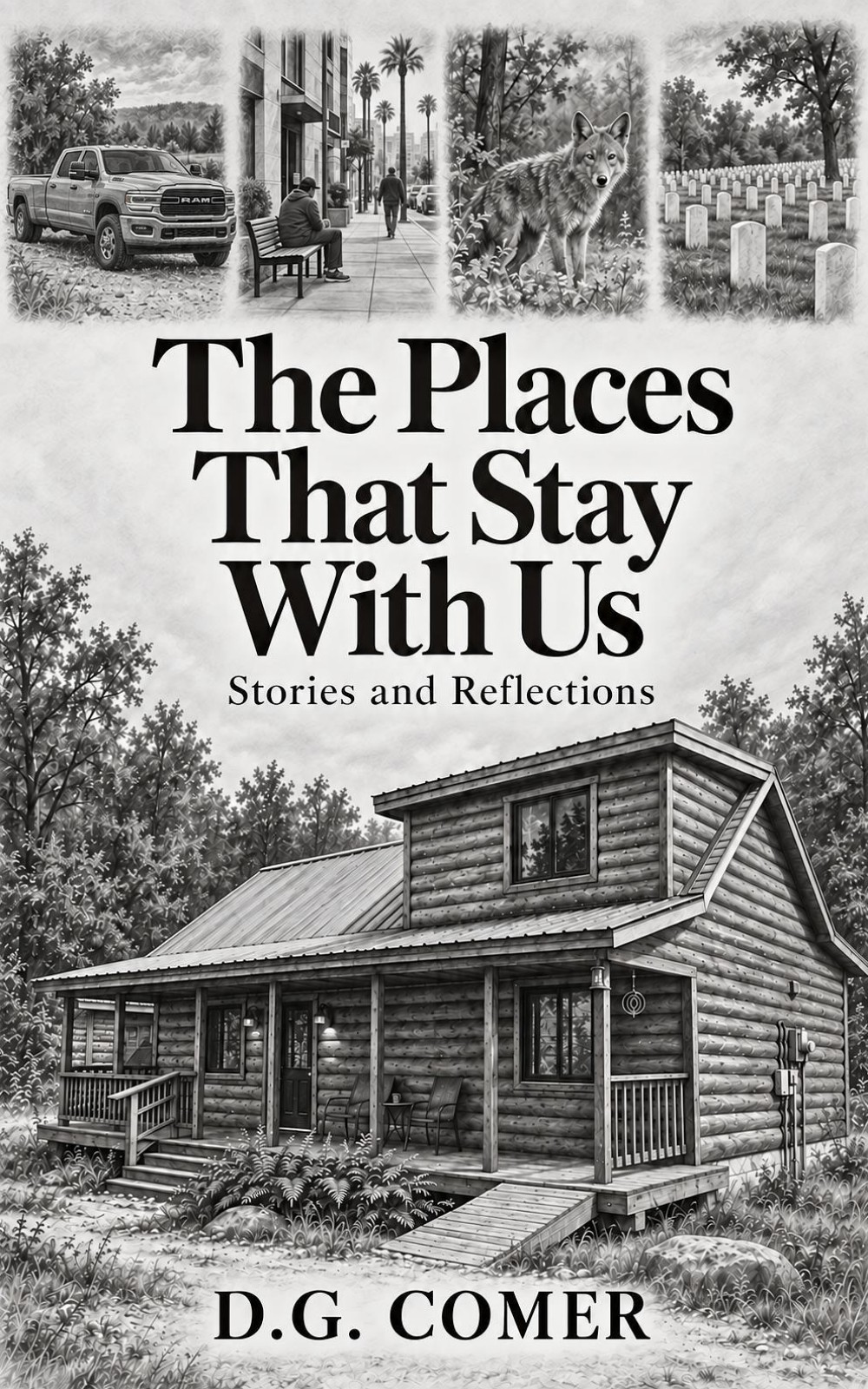
It is late August and near 93 degrees. The air is hot, and a breeze comes up the valley. After the long dry summer, the grasses on the hillside and near the road are brown and make a crunching sound as I step through them. I notice that the closer one gets to the creek, the greener the foliage becomes.
The creek cannot be heard; the long dry summer has reduced its flow to a trickle. I can hear several birds in a large fir tree, hidden by the branches. I can also hear the distant rumble of a tractor. Small stagnant ponds are keeping the animals and many nearby plants alive.
I observe a few butterflies bouncing this way and that, as if on a string, as they fly along. They are yellow and black, and this valley has plenty of what they need to survive.
The place I chose to visit is called Jenkins Barn. Jenkins was the family name of the people who lived there from the late 1800s until about 1930. This small area is nestled against the foothills of Craig Mountain, at the southern end of the Mission Creek Valley.
A large dark fly rockets past me like a missile. It moves too fast for me to tell what kind it is. I walk slowly; the rocks in the creek are hazardous. Somewhere nearby, a woodpecker is hammering out a steady rhythm. Stepping over a fallen log, I see a wasp fly past my nose. Looking to see where it is heading, I notice a large nest hanging too close for comfort. I give it a wide berth. I am allergic to stings, and being alone out here, I certainly wouldn’t want to be hit by anything.
There are many kinds of trees in this area. Tall pines and firs rise above the valley, while cottonwoods grow near the creek. I even notice a yew tree hidden among the others, still untouched by anyone who might have harvested its bark years ago.
Across the creek, near the bend, is a chokecherry bush. The berries were always bitter to my lips, but good eating just the same. In a pie with plenty of sugar and a thick crust, they were wonderful. Along the creek are fast-growing willows, and I also see quaking aspens.
Jenkins Barn once stood on the rocks of an alluvial fan. A stream from a small canyon deposited debris over the years, building up a wide, cone-shaped spread of rock and soil. The barn stood on the larger stones, while the finer dirt spread out onto the valley floor. This created rich soil that an early farmer used for a garden. The rest of the valley floor here was too rocky for fields and was used mainly for grazing horses and cattle.
Some of this soil began as volcanic ash thousands of years ago. More ash came later from other eruptions, and over time it mixed with sediments washed down from the hills. The land here has been shaped by fire, water, and time.
The First Memory
During that first visit, I sat on the cattle-loading ramp. It reminded me of when I was a young boy.
There at Jenkins Barn, when I was about ten years old, I moved stealthily up the valley, hunting. In my mind, I was a warrior of another time, seeking game to bring back to my people. My arrows were tipped with modern razor points. My bow was strong; I could barely pull it back to my cheek. I had a small backpack filled with a sandwich, cookies, and A&W root beer in a mason jar. Grandpa had bought the root beer in a dark brown one-gallon jug.
I came upon the cattle-loading ramp and sat there in the late afternoon, eating my sandwich and sipping that root beer. Then I saw movement on the hill. Walking slowly down the incline was a white-tailed buck. I watched as he looked this way and that, nose in the air, sensing for danger.
The half-eaten sandwich was put away, the mason jar screwed closed. I looked around for a hiding place. The buck disappeared into some trees at the bottom of the hill. I laid down on the loading ramp. An arrow was at the ready, and I felt the knife at my leg in its sheath.
Peeking between the sideboards, I watched as the buck stopped at the creek and drank. Then he started toward me. It seemed to me he was too wary and would never come within reach. If he didn’t stop or bolt, he would pass directly in front of me. It would be a perfect shot.
As he walked toward me, he turned his head many times, and each time he looked away, I pulled the arrow back a little further. When he was within eight feet, the arrow’s feathers were against my cheek. All I had to do was release my fingers. He would be hit right behind the front leg.
He stopped directly in front of me. Standing sideways, he turned his head. I was as still as a rock. My breathing was barely there. The wind was blowing up the valley into my face. He could not smell me or the half-eaten Spam and cheese sandwich.
The buck tilted his head while looking directly at me, trying to see what I was. I still didn’t move, nor did I release that arrow.
He walked slowly away, still cautious, out of range. Then he went up over the hill and out of sight.
I loosened my grip on the bowstring and sat on the edge of the loading chute. Pulling out the sandwich, cookies, and root beer, I finished my snack. I felt invigorated for not having released that arrow. Putting the empty mason jar back into my backpack, I headed home.